
Most people book their first session out of a very quiet kind of desperation. Not the dramatic kind. The slow kind, where sleep has been broken for eight months, the gut has opinions about everything, and the blood tests keep coming back fine.
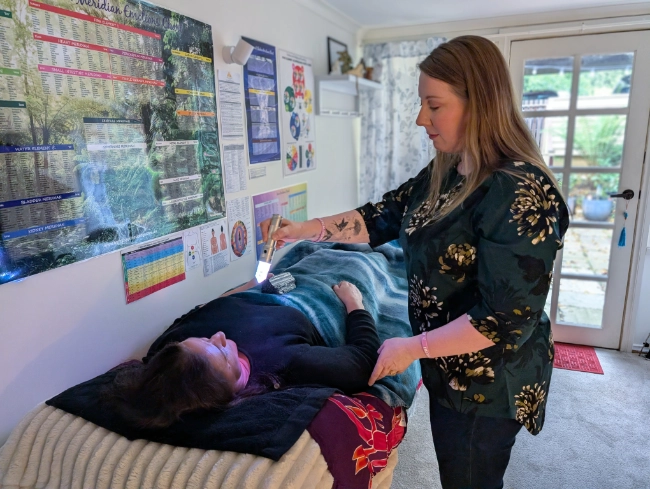
Kinesiology is a complementary therapy that uses gentle muscle monitoring to work out how your body is responding to stress: physical, emotional, nutritional. You stay dressed. You lie on a table. The practitioner tests muscle responses, follows what shows up, and works with it from there.
Stress stops running things
This is the one people mention most. Sessions are calming in a way that surprises first-timers, and a lot of the work goes straight at the stress response. You walk in wound up about the thing that happened at work. You walk out and the thing has shrunk.
Sleep usually follows within a few nights. Energy follows sleep. It’s not glamorous but it’s the change most people notice first.
It finds things you weren’t looking for
Muscle monitoring is feedback, not diagnosis. Instead of starting at the symptom and reasoning backwards, the practitioner follows the body’s responses to see where stress is sitting. This is where sessions get interesting. Something surfaces that you’d never have connected to the reason you booked, and it turns out to be the thing worth working on.
Old patterns loosen
If you keep hitting the same wall around confidence, grief, conflict, or a pattern you can describe in detail but cannot shift, kinesiology works with the emotional charge sitting underneath it. Some people cry on the table. Some people feel nothing until the drive home.
You leave with something to do
A session should end with a takeaway. A nutritional change, a movement, a breathing technique, something to pay attention to. Most of the progress happens between appointments, not on the table.
It fits around everything else
Kinesiology asks you to stop nothing. It sits alongside your GP, your physio, your psychologist. Any decent practitioner will tell you to keep your medical team informed.
What a session looks like
First appointments run 60 to 90 minutes. You’ll talk through your health history and what you want to work on, then spend most of the time on the table while the practitioner monitors muscle responses and applies gentle techniques: acupressure points, light touch, movement, emotional stress release.
Afterwards you might feel wrung out, or unusually relaxed, or both in the same hour. Drink water. Don’t schedule anything demanding.
Most people notice something after one session. Real change tends to take three or four, a couple of weeks apart.
Who it suits
People who are functioning but not thriving. The tests are clear, nothing is technically wrong, and yet something is off. It also suits people who want to be involved in their own health rather than handed a plan and sent home.
One honest note. Kinesiology is a complementary therapy and the clinical research behind it is thin. It is not a diagnosis and it does not replace medical treatment. If something is wrong, see your doctor. What it offers is a non-invasive way to work on stress and wellbeing alongside that care, and a lot of people find it useful in ways they struggle to explain to their sceptical friends.
If you’ve been stuck for a while, one session will tell you whether it’s for you.