
THE PATCH · ONLINE · REMOTE
Reiki energy healing in the Dandenong Ranges
Gentle energy healing, thoughtfully integrated.
Reiki is one of the gentle energy healing approaches I use alongside Kinesiology and Spinal Energetics.
It is where I began my own healing journey, and the foundation to my practice.
What is Reiki?
Reiki (pronounced ray-key) is a gentle form of energy healing that aims to support relaxation and a sense of balance.
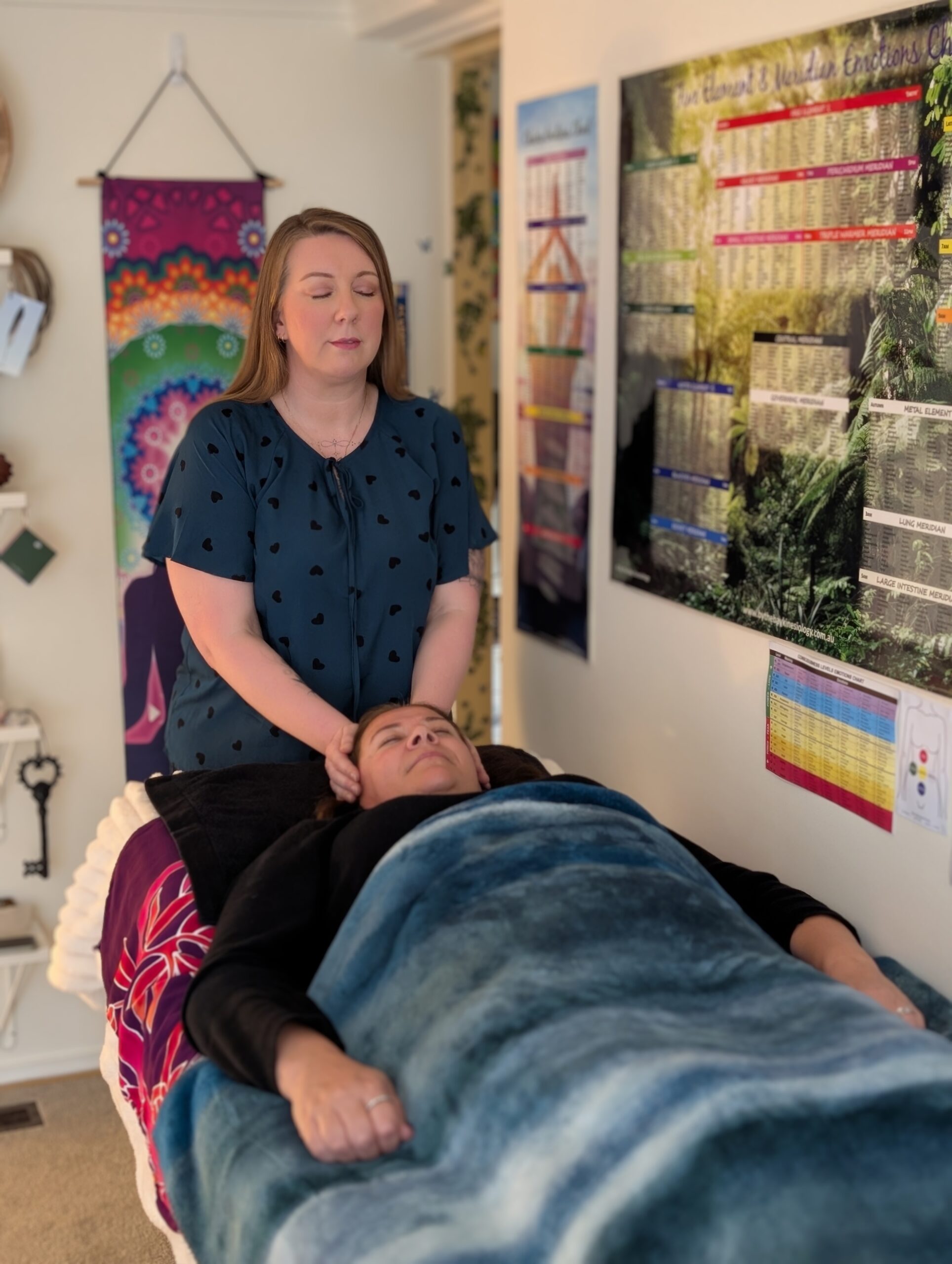
During a session, you lie comfortably face up on a cosy massage table with a blanket covering you while I use light touch, or place my hands just above the body, creating a quiet space for healing, rest and reflection.
Many people describe feeling calmer, lighter or deeply rejuvenated and relaxed afterwards, although every experience is unique.
Reiki Level 2,
Usui lineage
Trained to practise professionally, including distance work. Practising since 2008.
Full member, IICT
International Institute for Complementary Therapists
The Patch, Kallista and online
Mondays, Fridays and Saturdays in The Patch and online
Saturdays at Soma Kallista
By Appointment Only
Kinesiology, Spinal Energetics and Reiki are not registered health professions in Australia, and IICT membership is an industry association, not a government registration. These are complementary therapies and they do not replace medical care.
How does Reiki energy healing work?
Reiki has a traditional explanation and a physiological one, and I am not going to pretend the first is proven or that the second is all there is.
The traditional account, which is the one the practice comes from, is that there is a vital energy running through everything, that stress and exhaustion disrupt how it moves, and that a practitioner can act as a conduit for it. That is what Usui taught in the 1920s, it is what the training is built around, and it is a framework rather than a finding.
The physiological account is more modest and better supported. An hour of quiet, dim light, warmth, light stationary touch and somebody's undivided attention shifts the body out of alert and into rest. That shift is measurable. It is the same reason being properly looked after feels like something, and it does not require anybody to believe anything.
My honest position is that both are probably in play and I cannot separate them for you. What I can tell you is what happens in the room, which is described below, and what people say afterwards.
You do not need to believe in any of it for the hour to do what it does.
What happens in a session?
You arrive, and we sit for a few minutes with a cup of tea. You tell me as much or as little as you want about what's going on.
Then you lie down face up on the massage table, fully clothed, with a blanket. Lights low. Quiet, or soft sound and an eye pillow if you prefer.
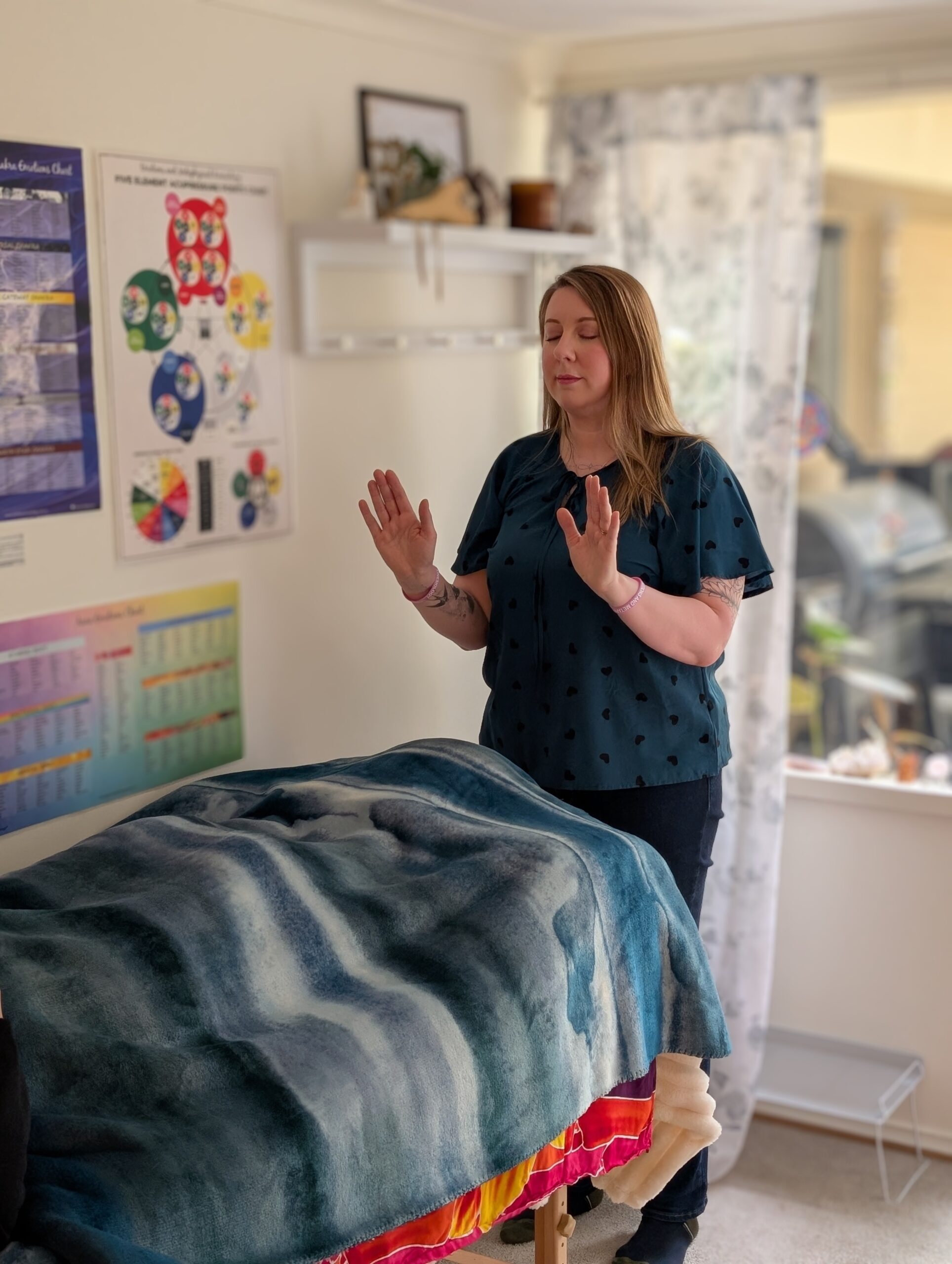
From there, I place my hands gently on or just above your body, and universal life force energy (Ki) flows through my hands to support you on every level. You don't need to do or say anything. This is your time to receive.
To close, we come back slowly and I intuitively draw an oracle card for you to take it's message into the rest of your day.
"I feel refreshed and much lighter" is what I hear most as people get up off the table.
Your only job is to arrive. Mine is to meet you where you are.
DOES THIS SOUND LIKE YOU?
People often come to Hill Tribe Healing because…
They’re emotionally or physically exhausted
They can’t seem to switch off
They know something feels out of balance, even if they can’t explain why
They’re curious about energy healing but don’t know where to begin
This approach may not be the right fit if…
You’re looking for a medical diagnosis or treatment
You’re expecting a guaranteed outcome
You’d prefer a purely clinical or symptom focused approach
You’re uncomfortable with gentle touch or energetic practices
If you’re unsure, please get in touch. I’m always happy to talk through whether this feels like the right fit.
TOUCH IN ENERGY HEALING
You decide the level of touch
Hands on or hands off is your choice
Hands off means my palms rest a few centimetres above you. It is not a lesser version and it is not a compromise. Some people ask for it because of a history, some because they would just rather, and I never ask why.
Where I do place hands
Head, crown, shoulders, upper chest, stomach, knees, feet. Light and still. No pressing, no kneading, no movement.
You stay fully clothed
Shoes off, glasses and bulky jewellery off, that is all.
You can change your mind mid-session
Including from hands on to hands off, and you do not need a reason. Say the word and I will lift my hands. You can also keep your eyes open the whole time, sit up, or stop entirely.
I will ask you about all of this before we begin rather than assuming, and I will ask in a way that makes "hands off, please" an easy thing to say.
TRADITION
A brief history of Reiki
Reiki was developed in Japan in the early 1920s by Mikao Usui, who created a practice combining gentle hands-on healing, meditation and a set of simple daily principles centred on gratitude, kindness and presence.
The practice was later refined by Chujiro Hayashi before being introduced to the West by Hawayo Takata, whose teaching shaped much of modern Reiki practice. Like most Western practitioners, my Reiki lineage traces back through her.
I’ve been practising Reiki since 2008, and while my sessions have evolved to incorporate kinesiology and Spinal Energetics, Reiki remains an important foundation of the way I work.
Its quiet, restorative nature continues to inform every session, whether it is the primary focus or one part of a broader approach.
At the heart of Usui’s teaching are five simple principles.
Just for today:
They’re not rules to follow perfectly.
They’re gentle reminders to return to, and they continue to guide my own practice as much as the sessions I share with others.
BEFORE YOU BOOK
Frequently Asked Questions
Reiki, Kinesiology, or Spinal Energetics?
Reiki is one of the gentle energy healing approaches I offer and incorporate into my sessions, alongside Kinesiology and Spinal Energetics.
If you're craving something deeply restful, you can specify when booking a Recharge session for this to be Reiki-focused. Otherwise, I'll blend the approaches to suit what you need on the day.
REIKI
REST & RESTORATION
Creates space for stillness and deep relaxation using gentle touch or hands held just above the body. Many people find it helps them slow down and reconnect with themselves.
KINESIOLOGY
GUIDED & COLLABORATIVE
Uses conversation and gentle muscle testing to help explore patterns of stress and imbalance, guiding where the session goes next.
SPINAL ENERGETICS
BODY LED & DYNAMIC
Works with the spine and nervous system through light touch and energetic awareness. Every experience is different, with the body responding in its own way.